The AI Tools Small Businesses Should Actually Be Using in 2026

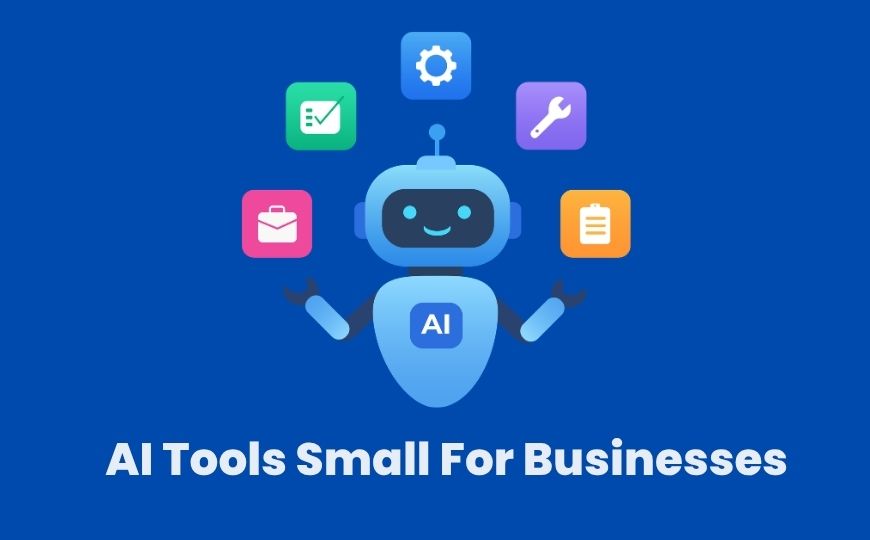
Small businesses do not need dozens of AI tools. They need a few that help them attract customers, manage leads, reduce repetitive work and run their operations more efficiently.
For businesses in Nigeria and across Africa, that might mean creating marketing content faster, following up with customers on WhatsApp, organising sales leads or automating routine administrative tasks.
The challenge is choosing tools that solve real problems rather than adding another subscription to the monthly expenses.
Here are the AI tools worth considering in 2026, what they do and where they fit into a small business.
1. AI Tools for Writing and Marketing
Creating content for websites, social media, email campaigns and advertisements takes time. AI writing assistants can help businesses produce first drafts, develop ideas and adapt messages for different audiences.
Three tools worth considering are:
- ChatGPT: Useful for brainstorming, drafting website copy, writing social media posts, preparing email campaigns, analysing documents and developing marketing ideas.
- Claude: Particularly useful for working with long documents, reviewing written content, summarising information and developing detailed drafts. It can also create and edit files.
- Grammarly: Helps improve grammar, clarity and tone. Its AI features also support rewriting and drafting within supported writing workflows.
Most small businesses can start with ChatGPT or Claude and add Grammarly if they need more writing assistance.
These tools should support your marketing process, not replace your knowledge of your customers. Review AI-generated content for accuracy, remove generic language and make sure the final message reflects your brand.
2. AI Tools for Sales and Customer Management
A business can attract potential customers and still lose sales because nobody follows up.
When enquiries arrive through a website, email, social media and WhatsApp, keeping track of every prospect becomes difficult. A customer relationship management (CRM) system helps bring that information into an organised process.
Consider these options:
- HubSpot CRM: Helps businesses manage contacts, track deals and organise sales activities. Its AI capabilities can assist with tasks such as summarising customer records, preparing for sales calls and generating content. Some features require specific plans or additional credits.
- Bigin by Zoho CRM: A sales-focused CRM designed for small businesses. It offers pipeline management, contact organisation and workflow capabilities. Its WhatsApp integration is available on eligible editions and requires the appropriate WhatsApp Business setup.
- Salesforce: Worth considering when a business has more complex sales processes, reporting requirements or plans to expand its customer management operations.
For many small businesses, HubSpot or Bigin is a sensible starting point. The right choice depends on budget, sales complexity and the communication channels your customers use.
If WhatsApp is central to your sales process, verify the specific integration, subscription requirements and messaging costs before committing. A CRM does not automatically connect to every WhatsApp conversation simply because it supports WhatsApp integration.
3. AI and Automation Tools for Repetitive Work
Some business tasks follow predictable patterns: a customer submits a form, a new lead needs to be recorded, a notification must be sent, or a team member needs to receive a task.
Automation platforms connect different applications so these steps happen with less manual effort. AI can also help classify information, summarise enquiries or draft responses within a workflow.
Two useful options are:
- Zapier: Connects thousands of applications and supports workflows that move information between tools. Its AI features can help users build workflows and perform tasks such as summarising or classifying information.
- Make: Provides a visual workflow builder for connecting applications, processing data and building more involved automations. Its AI capabilities support workflows and AI-agent use cases.
For example, a business could create a workflow that sends website enquiries to its CRM, notifies the appropriate person and creates a follow-up task.
The objective is not to automate everything. Start with a repetitive task that causes delays or errors, build the workflow, test it and monitor the results.
Zapier may suit businesses looking for straightforward app connections, while Make is worth exploring when workflows require more complex branching and data handling.
4. AI Tools for Graphics and Video
Businesses need visual content for social media, websites, presentations and advertising. AI-assisted design and video tools can help small teams produce that content without building a large production department.
Consider these options:
- Canva: Provides templates and AI-assisted features for creating graphics, presentations, videos and other marketing materials.
- CapCut: Useful for editing short-form videos, adding captions and preparing content for social platforms. Available features vary by device, region and plan.
- Adobe Express: Supports the creation of social graphics, promotional materials and short videos, with AI-assisted features.
For most small businesses, Canva is a practical starting point for everyday design work. Add CapCut if video is an important part of your marketing.
You do not need all three tools from the beginning. Choose based on the content you publish regularly and the features available within your budget.
5. AI Tools for Meetings and Documentation
Meetings often generate action points that are forgotten or recorded inconsistently. AI meeting assistants can transcribe conversations, summarise discussions and help identify follow-up tasks.
Two options are:
- Otter.ai: Offers meeting transcription, searchable notes and summaries, with integrations for supported meeting platforms.
- Fireflies.ai: Provides meeting transcription, summaries and tools for reviewing conversations and extracting useful information.
These tools can help consultants, agencies and distributed teams keep better records of client discussions.
Before using an AI meeting assistant, inform participants where appropriate and obtain any required consent. Review the resulting notes before sharing them, especially when discussions contain confidential business information.
6. AI for Website and Business Operations
Your website is often the first place potential customers learn about your business. AI can support website content development, customer enquiries, data analysis and routine administrative work, but the right setup depends on how your website and other systems are built.
Useful starting points include:
- ChatGPT: Can help draft website content, explain technical issues, analyse reports and plan improvements. Any code or technical recommendations should be tested before implementation.
- Google Analytics: Helps businesses understand website traffic and visitor behaviour. It is an analytics platform rather than an AI writing tool, but its reports can inform decisions about marketing performance and customer acquisition.
- Google Search Console: Helps website owners monitor search visibility, indexing and search performance. It complements AI-assisted SEO work by providing data about how a website performs in Google Search.
For WordPress websites, AI can assist with content planning, troubleshooting and SEO analysis. It does not replace regular updates, backups, security checks or technical testing.
Businesses should also avoid publishing AI-generated website content without reviewing its accuracy, usefulness and relevance to their audience.
How to Choose the Right AI Tools
The best tool stack depends on what is slowing your business down.
| Business need | Practical starting point |
|---|---|
| Writing and marketing ideas | ChatGPT or Claude |
| Grammar and writing clarity | Grammarly |
| Sales and lead management | HubSpot CRM or Bigin |
| Connecting applications | Zapier or Make |
| Graphics and presentations | Canva |
| Short-form video | CapCut |
| Meeting notes | Otter.ai or Fireflies.ai |
| Website and search performance | Google Analytics and Search Console |
This is a starting guide, not a recommendation to subscribe to every service. Free plans, usage limits, paid features and integration availability vary, so check the current terms before choosing a tool.
Build Systems Before Adding More AI
AI delivers more value when it supports a clear business process.
If enquiries are not being recorded, follow-ups have no defined owner or customer information is scattered across different platforms, adding AI may not solve the underlying problem.
Start by documenting how work currently gets done. Identify where delays occur, establish a consistent process and then decide which tasks can be supported by AI or automation.
For example, a simple sales process might involve:
- Capturing an enquiry through a website or messaging channel.
- Recording the lead in a CRM.
- Assigning responsibility for follow-up.
- Sending a reminder if no response is recorded.
- Tracking whether the enquiry becomes a sale.
AI can assist at several points, but the business still needs clear responsibilities, reliable data and a way to measure results.
It is also important to protect customer information. Review each tool’s data-handling terms and avoid entering sensitive customer or financial information into services that have not been approved for that purpose.
The Opportunity for African Small Businesses
Small businesses do not need to adopt every new AI product to remain competitive. They need to identify where technology can improve customer acquisition, service delivery and daily operations.
For a business that receives enquiries but struggles to follow up, a CRM may be more valuable than another content generator. For a team spending hours transferring information between applications, automation may offer a better return. For a business with an outdated website, improving its website and conversion process may be the priority.
The value comes from choosing the right combination of tools and making them work together.
At Donal Digital, we help businesses improve their websites, customer management, marketing and automation systems so their digital operations support measurable business goals.
The goal is not to use more AI tools. It is to build a business that works better with the right technology.